
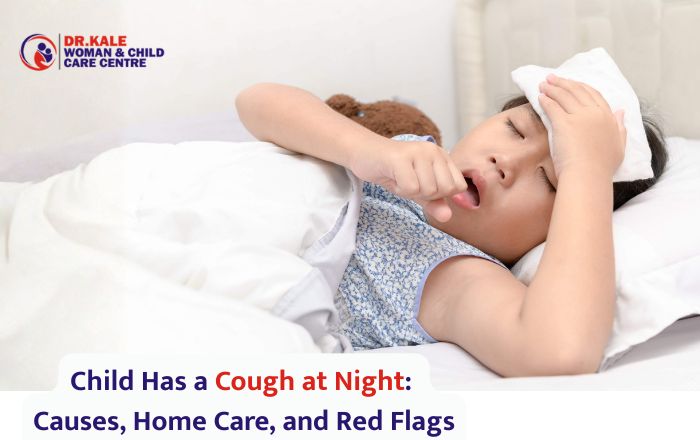
Does your child cough at night so badly that neither of you gets any sleep? You’re not alone. Almost every parent has been there — lying awake, listening to that relentless cough, wondering whether to rush to the hospital or wait until morning. The good news is that most cases of nighttime cough in children have simple explanations and can be managed effectively once you know what’s going on. Let’s break it down clearly.
Why Do Children Cough More at Night?
When your child lies down, mucus from the nose drips down the back of the throat — a process called postnasal drip — which triggers coughing. Nighttime air is also cooler and drier, which irritates sensitive little airways. Dust mites hiding in pillows and mattresses don’t help either. All of this together explains why your child’s cough at night feels so much worse than during the day.
7 Common Causes of Nighttime Cough in Children
1. Common Cold The most frequent cause. Mucus builds up and drains at night, causing a wet, persistent cough in children that usually clears within 7–10 days.
2. Asthma A child with asthma often coughs mainly at night or early morning but seems perfectly fine during the day. If the nighttime cough in your child is dry, recurring, and comes with wheezing or breathlessness, asthma should be checked.
3. Allergic Cough Dust, pet fur, mold, and pollen are common triggers. An allergic cough in children is usually dry and repetitive, often paired with a runny nose or sneezing. This is very common in areas with high dust levels — including right here in Moshi.
4. Postnasal Drip When the sinuses make too much mucus — due to allergies or a cold — it slides down the throat when your child lies flat. This causes a wet, throat-clearing cough at night in children that can go on for weeks.
5. Croup Croup causes a very distinct loud, barking cough — almost like a seal. It’s caused by a viral infection that swells the vocal cords and mostly affects children between 6 months and 3 years. It sounds alarming but is usually manageable at home.
6. Acid Reflux (GERD) When stomach acid travels up the food pipe while your child lies down, it irritates the throat. Signs include complaints of a burning feeling, frequent belching, or a cough that gets worse after meals.
7. Whooping Cough (Pertussis) This bacterial infection causes intense coughing fits followed by a high-pitched “whooping” gasp for air. It is highly contagious and can be dangerous — especially for babies. Vaccination is the best protection.
Simple Home Care Tips That Actually Work
Before reaching for medicine, try these safe and practical steps:
- Elevate their head: For children over 1 year, a slightly raised pillow helps reduce postnasal drip during sleep.
- Use a cool-mist humidifier: Adds moisture to dry night air, easing irritated airways. Clean it regularly to avoid mold.
- Give honey before bedtime: Studies show honey works better than many cough syrups for reducing nighttime cough in children. One teaspoon is enough. Never give honey to babies under 12 months.
- Saline nasal drops: A few drops in each nostril before bed clears congestion and reduces throat dripping — simple, safe, and effective.
- Steam for croup: Sit with your child in a steamy bathroom for 10 minutes. The warm moist air helps open swollen airways quickly.
- Warm fluids: Warm water, clear soup, or diluted warm juice soothes the throat and thins out mucus.
- Allergen-free bedroom: Wash bedding weekly in hot water, use dust-proof pillow covers, and keep pets out of the bedroom to cut down on allergic cough triggers in children.
Red Flags — When to Stop Home Treatment and See a Doctor Immediately
Some symptoms should never be ignored. Take your child to a doctor right away if you notice:
- Breathing that looks difficult — chest pulling in, nostrils flaring, or fast breathing
- Bluish lips or fingernails — this is a medical emergency, call for help immediately
- High fever above 104°F (40°C) that doesn’t come down with medication
- Cough lasting more than 3 weeks without improvement
- Your baby is under 3 months old and has any cough at all
- Child is too tired to eat or drink, or is unusually sleepy and hard to wake
- Whooping or barking sound during coughing with genuine breathing trouble
When something doesn’t feel right — trust your instincts and call a pediatrician.
Frequently Asked Questions
Q1. Why does my child cough only at night?
Lying down causes mucus to collect in the throat. Dust mites in bedding and dry night air also make nighttime cough in children worse.
Q2. Can I give my child cough syrup?
Cough medicines are not recommended for children under 4 years old. Always check with your pediatrician before giving any medication.
Q3. How long should a child’s cough last?
A cold-related cough typically clears in 2 weeks. A cough in children lasting more than 3–4 weeks needs a doctor’s evaluation.
Is Your Child’s Cough Not Going Away?
If your child’s nighttime cough has lasted more than a week, keeps coming back, or is paired with wheezing or breathing trouble — it’s time to get it checked properly.
Visit Dr. Mandar Kale — Pediatrician for Cough and Allergic Cough Treatment in Moshi
📍 Dr. Kale Woman & Child Care Clinic, Moshi
Dr. Kale works directly with children and families to find the real cause of the cough — whether it’s an allergy, infection, or something like asthma — and helps your child feel better as quickly as possible.
👉 Book your child’s appointment today. Because a good night’s sleep matters — for your child and for you.