
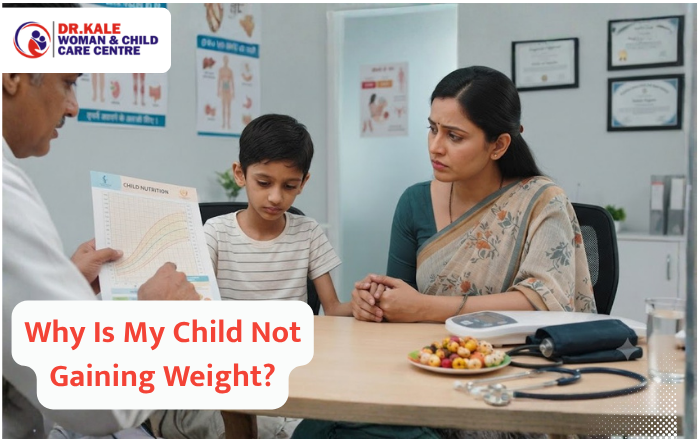
A child’s growth is one of the most common concerns for parents. Some children are naturally smaller or gain weight more slowly than others, while in some cases, poor weight gain may indicate that the child is not getting enough nutrition or has an underlying health problem.
If you are wondering, “Why is my child not gaining weight?”, it is important to look at the child’s overall growth, eating habits, activity level, and health rather than focusing only on the number on the weighing scale.
This blog explains common reasons for poor weight gain in children, signs parents should watch for, when to consult a pediatrician, and how the problem is usually evaluated.
What Is Considered Poor Weight Gain in Children?
Children do not all gain weight at the same rate. A pediatrician usually looks at a child’s weight, height, age, and growth pattern over time.
A child may need evaluation if:
- Weight gain is consistently slower than expected for their age
- The child is losing weight
- The child’s growth has stopped or dropped across growth chart percentiles
- The child has very little appetite for a long period
- The child appears unusually tired or weak
- The child has frequent vomiting, diarrhea, or other digestive problems
- The child is not growing in height as expected
A single low weight measurement does not necessarily mean that a child has a growth problem. The overall growth pattern is more important.
Why Is My Child Not Gaining Weight?
There can be several reasons why a child is not gaining weight. These range from simple feeding difficulties to medical conditions that require treatment.
1. The Child Is Not Eating Enough
One of the most common reasons is simply not getting enough calories or nutrients.
Some children have a small appetite, become distracted while eating, or eat only a few bites at meals. If this happens regularly, the child may not receive enough energy to support normal growth.
Parents may notice:
- The child takes a very long time to finish meals
- The child refuses several types of food
- The child eats only small portions
- The child frequently skips meals
- The child drinks too much milk or other beverages and feels full before meals
2. Picky Eating
Picky eating is common during childhood. However, very restrictive eating can sometimes affect weight gain.
For example, a child may accept only a few foods and refuse fruits, vegetables, pulses, eggs, dairy products, or other nutritious foods.
A pediatrician or dietitian can help parents understand whether the child’s diet is providing enough calories, protein, vitamins, and minerals.
3. Feeding Difficulties
Some children have difficulty chewing, swallowing, or managing certain food textures.
Feeding problems can occur in infants and young children and may sometimes be associated with developmental issues, oral motor difficulties, or previous unpleasant experiences with food.
If every meal becomes a struggle, it is worth discussing the problem with a pediatrician.
4. Frequent Infections or Illness
Children who frequently become unwell may have difficulty gaining weight because their nutritional needs increase during illness.
Repeated infections can also reduce appetite and make it difficult for a child to eat normally.
If your child frequently experiences fever, respiratory infections, diarrhea, or other illnesses along with poor weight gain, medical evaluation may be needed.
5. Digestive or Absorption Problems
Sometimes a child eats reasonably well but still does not gain weight because the body is not properly absorbing nutrients.
Possible causes can include:
- Persistent diarrhea
- Chronic constipation
- Food intolerance
- Celiac disease
- Inflammatory bowel conditions
- Certain digestive disorders
Symptoms such as abdominal pain, bloating, frequent loose stools, vomiting, or blood in the stool should not be ignored.
6. Vomiting or Reflux
Frequent vomiting can make it difficult for children to retain enough food and calories.
In babies, reflux may sometimes interfere with feeding. Older children may also experience recurrent vomiting due to different medical conditions.
If vomiting happens frequently or is associated with poor weight gain, consult a pediatrician.
7. Increased Nutritional Requirements
Some children may need more calories than others because of increased physical activity or certain medical conditions.
Children who are very active may burn more energy throughout the day. If their food intake does not meet their energy requirements, weight gain may be slower.
8. Underlying Medical Conditions
Poor weight gain can occasionally be related to an underlying medical condition.
Depending on the child’s symptoms and examination, a pediatrician may consider conditions involving:
- Thyroid function
- Chronic infections
- Digestive health
- Heart or lung conditions
- Metabolic disorders
- Kidney problems
- Hormonal or nutritional deficiencies
This does not mean that every child with slow weight gain has a medical condition. Proper evaluation helps identify whether further testing is actually necessary.
What Signs Should Parents Watch For?
Parents should pay attention to more than just weight.
Speak with a pediatrician if your child has poor weight gain along with:
- Noticeable weight loss
- Persistent poor appetite
- Frequent vomiting
- Long-lasting diarrhea
- Recurrent abdominal pain
- Difficulty swallowing or chewing
- Excessive tiredness
- Frequent infections
- Delayed developmental milestones
- Reduced activity compared with usual
- Significant changes in eating habits
- Poor height growth
In babies, difficulty feeding, repeated vomiting, fewer wet diapers, or poor growth should be discussed with a pediatrician promptly.
How Does a Pediatrician Evaluate Poor Weight Gain?
When a child is not gaining weight as expected, the pediatrician generally starts by understanding the child’s growth history and daily routine.
The evaluation may include:
1. Growth Assessment
The child’s weight and height are measured and plotted on an appropriate growth chart. Previous measurements are also reviewed to understand the growth trend.
2. Eating History
The doctor may ask about:
- What the child eats in a typical day
- Meal and snack timings
- Portion sizes
- Milk and beverage intake
- Food preferences
- Appetite
- Feeding difficulties
3. Medical History
The pediatrician may ask about previous illnesses, vomiting, diarrhea, allergies, infections, medications, and developmental progress.
4. Physical Examination
A physical examination helps the doctor look for signs of nutritional deficiency or other health problems.
5. Tests When Needed
Not every child requires blood tests or scans. If the history or examination suggests a possible medical cause, the pediatrician may recommend specific investigations.
How Can Parents Help a Child Gain Weight?
The goal should not simply be to make a child eat more. The focus should be on providing nutritious, calorie-rich foods in a balanced way.
Parents can try these approaches:
- Offer regular meals and healthy snacks.
- Include protein sources such as dal, eggs, paneer, dairy products, beans, or suitable alternatives.
- Add healthy fats to meals when appropriate.
- Offer a variety of fruits and vegetables.
- Avoid excessive juices, sugary drinks, and snacks that can reduce appetite for proper meals.
- Keep mealtimes calm and avoid forcing the child to eat.
- Follow age-appropriate portion sizes.
- Encourage regular physical activity and adequate sleep.
For younger children, dietary changes should be appropriate for their age and developmental stage.
Should I Give My Child Weight Gain Supplements?
Parents sometimes consider nutritional powders or weight gain supplements when their child is underweight.
However, supplements should not be started without understanding why the child is not gaining weight. In some cases, dietary changes may be enough. In others, the child may need treatment for an underlying condition.
A pediatrician can determine whether a supplement is appropriate and whether any specific nutritional deficiency needs attention.
When Should I See a Pediatrician?
If you are concerned that your child is not gaining weight, it is better to discuss the concern with a pediatrician rather than relying only on comparisons with other children.
You should particularly seek medical advice if:
- Your child is losing weight.
- Weight gain has slowed noticeably.
- Your child has persistent vomiting or diarrhea.
- Appetite remains poor for a prolonged period.
- Your child has frequent infections or other recurring health problems.
- Height or developmental progress also appears delayed.
- Your child seems unusually tired or less active.
Early assessment can help identify nutritional or medical concerns and guide appropriate treatment.